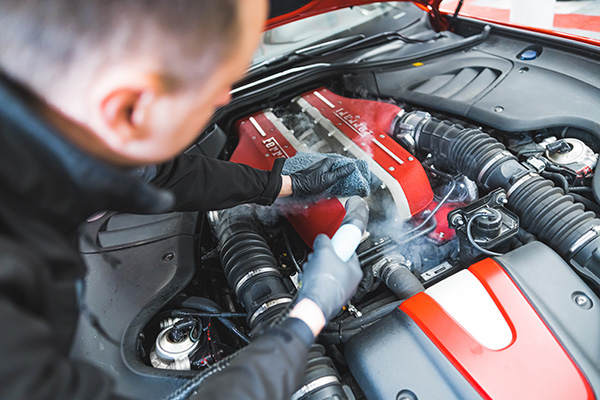
BMW oil leaks rarely start with a clean drip on the driveway. More often it’s a faint burning smell after a drive, a little wisp of smoke when you’re stopped, or a greasy film that seems to spread across the engine bay. Oil travels, especially on a warm engine with airflow moving it around, so the spot you see is not always the source.
The goal is to figure out where the leak begins, not where it ends up.
Why BMW Oil Leaks Can Be Hard To Pin Down
BMW engines tend to be packed tight, run warm, and use a mix of rubber and plastic sealing surfaces that age over time. A small seep can land on a hot surface and burn off, leaving you with smell and smoke but no puddle. That’s why a driver can say the leak is “minor” while the engine bay is quietly getting coated.
Another reason leaks are confusing is that one leak can mimic another. Oil from the valve cover area can run down the engine, making it appear as if the oil filter housing is leaking. Oil from the filter housing can spread forward and down and show up near belts and pulleys. We like to find the highest wet point and trace from there, because oil almost always follows gravity and airflow.
Valve Cover Gasket Leak Signs You Can Actually Spot
A valve cover gasket seals the top of the engine. When it leaks, oil often shows up along the edge where the cover meets the cylinder head, then works its way down the sides.
Common signs include:
- Burning oil smell after driving, especially when you come to a stop
- Light smoke from the engine bay after a longer trip
- Wet oil residue along the top edge of the engine or down the side
- Misfires or rough running if oil gets into the spark plug wells on certain engines
If the leak is toward the back of the engine, it can be harder to see from above. In those cases, the smell can be stronger because oil may land closer to hot exhaust components. A mirror and a light can help, but a proper inspection is usually faster and more accurate.
Oil Filter Housing Gasket Leak Clues And Why They Matter
The oil filter housing gasket seals the housing to the engine. When it fails, oil often appears near the front or side of the engine, then runs down toward the lower covers. This area matters because leaked oil can end up on belt driven components.
Drivers often notice:
- Fresh wet oil around the filter housing area
- Oil streaking down the front of the engine
- Burning smell that comes and goes, depending on where the oil lands
- Drips that appear after parking, even if you never see smoke while driving
Oil on belts is not something to brush off. It can soften rubber and reduce grip, and that can lead to belt slip or noise. In some cases, it can also contaminate nearby electrical components, which creates a second problem you did not ask for.
Symptom Timeline: From Seep To Smoke And Drips
Early on, you might only notice a smell after driving, or a light oily dust that starts collecting around the leak area. Oil level may not drop much, so it’s easy to assume it can wait.
Next, you may start seeing occasional smoke after a long drive or when idling at a light. The leak is now reaching hot surfaces more often. You might also notice the engine bay looks dirtier because oil holds onto dust and grime.
Later, the leak becomes more obvious. Drips show up after parking, the smell becomes frequent, and the oil spreads into areas that can affect other parts. At that stage, the issue isn’t only the leak itself. It’s what the leak is doing to everything around it.
What Makes These Leaks Get Worse Over Time
Heat cycles harden gaskets and shrink sealing surfaces. Crankcase pressure also plays a role. If the crankcase ventilation system is not working correctly, pressure can push oil past gaskets that are already tired. That’s one reason a leak can accelerate quickly after being stable for months.
Driving style and maintenance can influence it, too. Long service intervals, sludge buildup, and frequent short trips can all contribute to gasket stress. That doesn’t mean the engine is doomed. It just means the leak usually has a reason, and fixing the gasket is often only part of keeping it from returning.
Cost Smart Planning: Fix The Leak Before It Creates A Second Repair
The most cost-effective move is to confirm the source early and fix it before oil damages surrounding components. If the leak is near the belts, alternator, or wiring, delaying often increases the bill. If oil is getting into spark plug wells, it can cause misfires and coil damage over time.
After the repair, it’s worth monitoring the oil level and checking for fresh residue for a week or two. We also like to verify that crankcase ventilation is working correctly, because that system can turn a small seep into a repeat leak if pressure is building. We’ve seen plenty of BMW owners save money by fixing the leak early, cleaning the area properly, and making sure the root cause was addressed.
Get BMW Oil Leak Diagnostic in Charlotte, NC, with Pete's Auto Service
If you’re smelling burning oil, seeing smoke after a drive, or spotting fresh oil on the engine, it’s time to locate the source before it spreads. We’ll pinpoint whether the leak is from the valve cover gasket, oil filter housing gasket, or another common seep point, then recommend the repair that makes sense for your engine.
Get a BMW oil leak diagnostic in Charlotte, NC, with Pete's Auto Service, and we’ll help you stop the leak before it turns into a bigger problem.